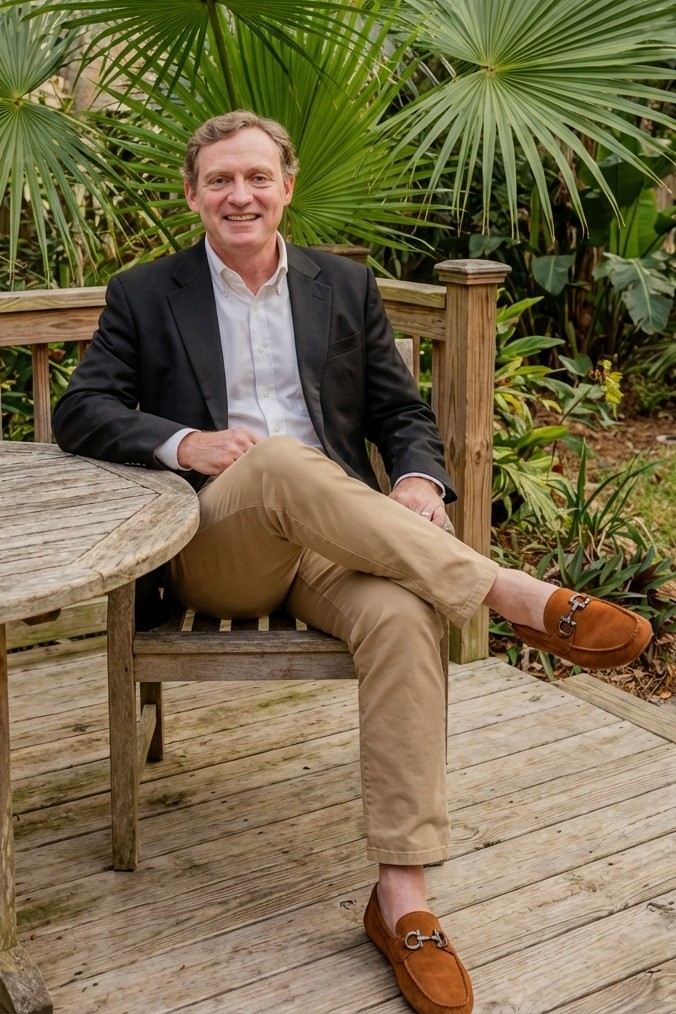
About — Dr. John Lynn Jefferies
The best way to curtail healthcare costs is to avoid the need for healthcare in the first place.
— John Lynn Jefferies, MD, MBA, MPH, FACC, FAHA, FAAP, FHFSA, FRCPE, FESC
The best way to curtail healthcare costs is to avoid the need for healthcare in the first place.
— John Lynn Jefferies, MD, MBA, MPH, FACC, FAHA, FAAP, FHFSA, FRCPE, FESCI grew up in Jacksboro, Tennessee — Appalachian coalfields, ten thousand people, no physicians in the family. Scots-Irish working stock. The expected road was a local one. I took a different one, though I couldn't have told you why at the time, other than faith.
I prayed then, and I pray now. Not as performance — but because I genuinely believe I've been guided. That the work I've ended up doing found me as much as I found it. I think you can feel the difference in a person who believes that.
I attended public schools throughout. University of Tennessee for microbiology. UT College of Medicine in Memphis. At every step I found myself choosing the less obvious path, the path less traveled. I arrived at the University of Kentucky residency alongside peers from Harvard and Johns Hopkins, and matched them the only way I knew how — by outworking them.
The health disparities that population health researchers write about from the outside — inadequate access, under-diagnosis, the cost of geography — are things I saw from my own lived experience, of having 25+ years in healthcare.
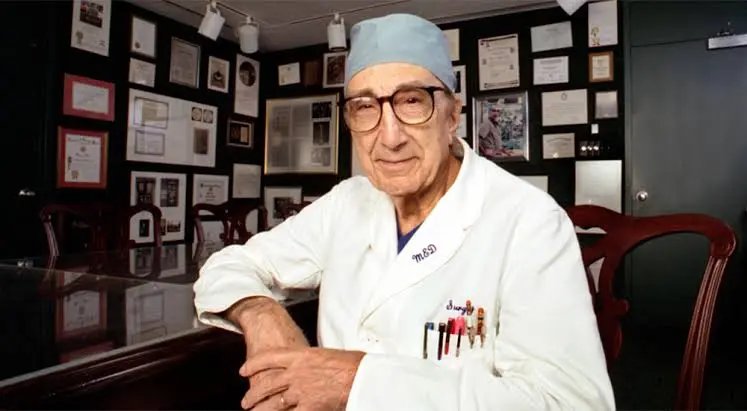
Performed over 60,000 cardiac operations. Developed the roller pump that made open-heart surgery possible. Presidential Medal of Freedom. Congressional Gold Medal. Among the most decorated physicians in American history — and a direct mentor during my fellowship.
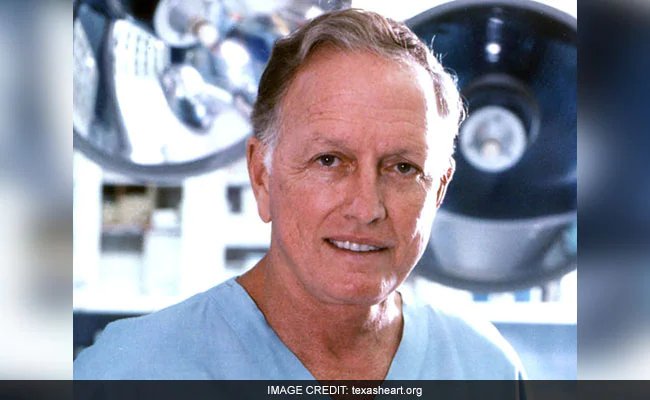
Founded Texas Heart Institute. Performed the first successful heart transplant in the United States. Presidential Medal of Freedom. The most prolific cardiac surgeon in history — also a direct mentor, at the same institution, during the same fellowship.
A dual Adult and Paediatric Cardiology fellowship — both institutions simultaneously — is not the obvious move. Approximately thirty people in the world have done it.
BSc Microbiology. MD, Memphis. Internal Medicine residency, University of Kentucky — alongside Harvard and Johns Hopkins peers.
Adult and Paediatric Cardiology concurrently, under DeBakey and Cooley. Texas Children's: #1 nationally in paediatric cardiology.
~30 people worldwideJay M. Sullivan Endowed Chair. Editor of two cardiology textbooks. 300+ peer-reviewed publications. 12,000+ citations.
Epidemiology. The lens that connects the individual patient to the system behind them.
Ranked #1 globally. Eight years' post-graduate experience required. The degree that made me bilingual between medicine and business.
Fellow of the Royal College of Physicians of Edinburgh and European Society of Cardiology. Extraordinarily rare for an American physician. Seven certifications and fellowships total.
Rare for any American physicianThis is the number — just the dual cardiology qualification alone, before anything else on this page. It represents a choice almost nobody makes, for reasons that are straightforwardly about difficulty.
The academic path was mapped out: section head, chief of cardiology, department chair, dean. I'd done most of the hard work to make it inevitable. And I looked at it, and chose something harder — because I believed I could reach more people outside the institution than inside it.
A physician-executive embedded inside a corporation — with real diagnostic expertise, population health training, and the business education to understand the incentive structures — can challenge unnecessary care at scale. That is what a department chief simply cannot do.
$5.3 trillion a year, almost all concentrated at the point of crisis. The top 5% of patients account for half of all costs. The conditions driving that — heart disease, diabetes, hypertension — are, in significant proportion, preventable. Almost nothing is built around the decade of opportunity that precedes the crisis.
Providers are paid for procedures, not outcomes. Middlemen profit from managing spend, not reducing it. Employers write the cheque with no clinical voice in the room. The system responds rationally to its incentives. The incentives are wrong.
Most CHOs come from occupational health. I can read a medical record and identify an unnecessary procedure. I can advocate for a patient in real time, with real clinical authority. That is a different skill set — and a different outcome.
The only FDA-cleared blood volume analyser. 98% accuracy. Forty years old and largely unknown — despite measurably improving heart failure outcomes. My mandate: get it to the clinicians who need it.
A live proof-of-concept: a Clinical CHO embedded inside a large self-insured employer, challenging unnecessary care in real time. Early data suggests meaningful cost savings.
Elite cardiovascular care for elite athletes. The diagnostic standard and access I believe every person deserves — regardless of who they work for.
Including CuesHub, whose Workload Heart Rate metric generates population health data at scale — and 9+AI. Advisory and equity positions across nine companies.
I grew up in a world where loyalty to family and community wasn't a value — it was the operating system. In East Tennessee, the clan was everything. You showed up for your people. You didn't need a reason beyond that.
That instinct never left. I see it in medicine, too. The people who work in healthcare — the physicians, nurses, researchers, the ones who've given years to understanding how the body fails and how to help it recover — they are, in a real sense, a clan. Bound by shared purpose, shared knowledge, and a shared belief that the work matters.
My wife is a psychiatrist. Our children are the reason any of this matters more than I could put on a website. We have built a life in Memphis together, and I have tried to make that life count — professionally, in the community, and at home — simultaneously. My Wharton professor Stew Friedman called that a four-way win. I had to see it before I believed it.
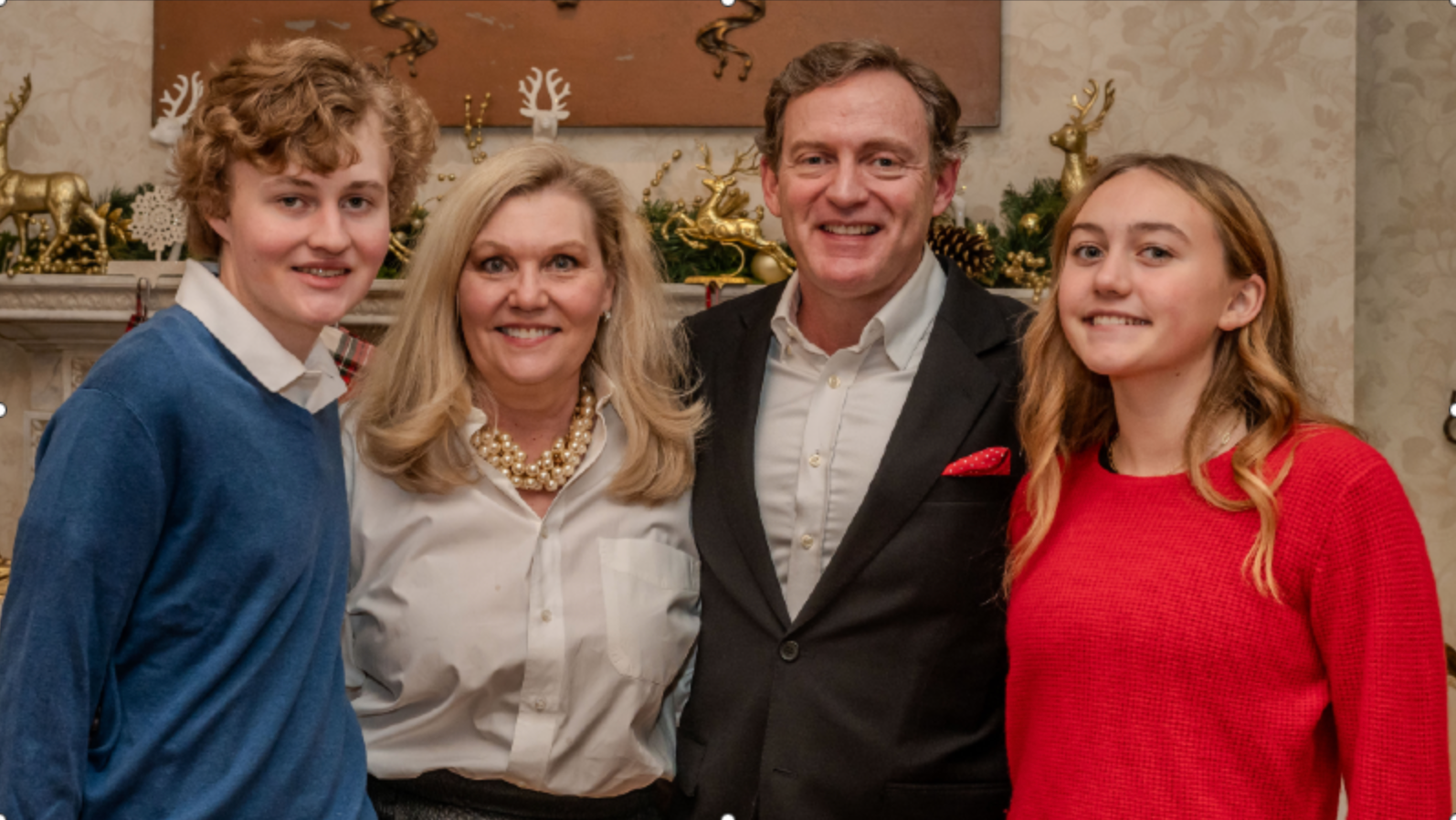
Memphis, December 2025 (optional — remove if preferred)
My wife is a psychiatrist. Our two children grew up watching both of us put long hours into work that, we hoped, served people beyond our household. We have built a life in Memphis together — in community, in faith, and in the belief that work, home, and family don't have to compete. My Wharton professor Stew Friedman called that a four-way win. I had to live it before I believed it.
The clan instinct I grew up with in East Tennessee — loyalty to your people, showing up, doing the work — has never left. It shapes how I lead, how I practise, and how I think about what healthcare is ultimately for.
Four years ago, my son's school introduced our family to Make-A-Wish. We have helped grant three wishes directly — including one for a young man with Barth syndrome, an ultra-rare heritable heart condition I specialise in, whose wish was a music production studio.
The experience made concrete something I'd understood only theoretically: that work, home, community, and self don't have to compete. The best actions serve all four at once.
As team cardiologist for the Memphis Grizzlies, I see elite-level care with no resource constraint — advanced diagnostics, immediate access, proactive monitoring.
I don't believe NBA athletes should be the only people who receive it. That observation drives most of what I do outside the arena.
Appalachian East Tennessee is not an abstraction. It is where I am from. The health disparities researchers describe from the outside — inadequate access, under-diagnosis, the cost of geography — are things I grew up around.
That knowledge is not replicable by credential. It is why this work feels personal rather than theoretical.
The fellowships, the publications, the credential stack — I am aware of how they can land. None of them, individually or together, are the reason any of this matters.
I came from a town of ten thousand with no physicians in the family. I have not forgotten what it felt like to be outside the system looking in. That, more than anything on this page, is the credential that counts.
300+ peer-reviewed publications. Seven board certifications and fellowships. Two textbooks. A named endowed chair. For those who want the complete academic picture.